

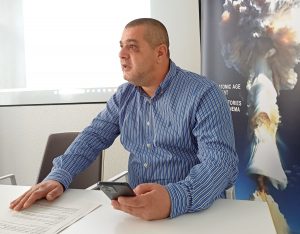
When my personal story was first published on the ICBUW website under the title “My Story – From Heart Attacks to the Fight for Truth”, I described how a series of serious health problems began years after my deployments to Iraq and Afghanistan as a Romanian non-commissioned officer.
At that time, the central question remained unanswered: what had caused the medical collapse that started while I was still in service?
Since then, new scientific evidence has emerged and the case has moved into both national and European institutional arenas.
Scientific findings
Independent laboratory analyses conducted at the Horia Hulubei National Institute for Physics and Nuclear Engineering (IFIN-HH) in Romania identified the presence of multiple toxic and potentially radioactive elements in biological samples. Among them were uranium, lead, cadmium, cesium, strontium, iridium and several other heavy metals.
To clarify the toxicological significance of these findings, the results were evaluated by Professor Dr. Jovica Jovanović, a specialist in occupational toxicology. His expert opinion confirmed that several of the detected elements fall within carcinogenicity classifications used by the International Agency for Research on Cancer (IARC) and that chronic exposure to such substances can plausibly contribute to severe hematological disorders as well as other forms of cancer.
Additional analysis carried out by Professor Dr. Antonietta Gatti focused on nanotoxicological mechanisms. Her work identified inorganic particulate structures compatible with exposure to high-temperature military combustion environments. Scientific literature has linked this type of particulate contamination to chronic inflammatory and hematological processes, as well as to certain forms of cancer.
The contact with Professor Gatti and the possibility of conducting this analysis became possible thanks to the support and guidance of ICBUW CoChair Ria Verjauw, who has been closely involved in international efforts to document health consequences linked to military contamination.
Taken together, these three layers of evidence — laboratory detection, toxicological evaluation and nano pathological analysis — provide a coherent scientific framework suggesting long-term exposure to complex toxic particulate matter.
The institutional response in Romania
Despite this growing body of scientific documentation, the response from Romanian authorities has been difficult.
The Central Military Medical Expert Commission of the Romanian Ministry of National Defence eventually acknowledged the severity of my medical condition and granted Grade II disability status. However, the commission refused to recognize the occupational origin of the disease, even though extensive documentation had been submitted, including the IFIN-HH report, the toxicological expert opinion and a detailed technical report describing the suspected exposure mechanisms.
This partial recognition — disability without occupational attribution — has become the central issue in ongoing legal proceedings.
A case that reached the European level
In parallel with the national procedures, the case was brought before the European Parliament through Petition No. 0381/2025 submitted to the Committee on Petitions.
The petition raises concerns about the practical implementation of European occupational health legislation within military systems, particularly the obligations derived from Directive 89/391/EEC and Directive 2004/37/EC regarding protection against carcinogenic exposure.
An important step in this process was the structured response submitted to the European Commission after its initial reply. This response was prepared with the assistance of experts from the European Organisation of Military Associations and Trade Unions (EUROMIL), together with guidance and input from ICBUW CoChair Professor Manfred Mohr. It helped clarify that the formal transposition of European legislation does not automatically guarantee its effective enforcement in practice. In particular, the support of EUROMIL President Emmanuel Jacob was instrumental in shaping the response that ultimately allowed the petition to remain open for further examination.
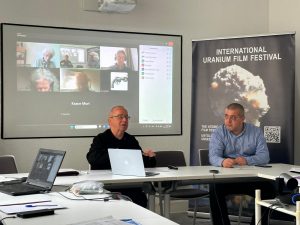
Prof. Manfred Mohr and Dragos Nicolae Ghita at ICBUW workshop
International attention and procedural changes
The case has also attracted attention from several international actors concerned with toxic exposure risks in military environments. ICBUW has followed the developments closely, and discussions with experts and organizations working on occupational health issues within the armed forces have helped bring broader visibility to the problem.
One concrete development followed this increased attention. At the end of 2025, the Romanian Ministry of National Defence modified its internal procedural rules and introduced a provision allowing military personnel to directly notify suspicion of occupational disease. Previously, the initiation of such procedures was effectively controlled by institutional structures, making it extremely difficult for affected individuals to trigger an investigation.
While this change represents a potentially important procedural improvement, it remains unclear whether the new mechanism will function effectively in practice.
An unresolved question
Today, the case continues simultaneously on two fronts: a judicial challenge before national courts and ongoing institutional examination at the European level.
The broader issue raised by this case goes beyond my personal situation. It concerns whether European occupational health protections are effectively applied to military personnel who may have been exposed to toxic substances during overseas deployments.
For many veterans across different countries, serious illnesses appear years after their return from conflict zones. When exposure registries, long-term monitoring systems and transparent investigative mechanisms are absent, establishing the occupational nature of these illnesses becomes extremely difficult.
For this reason, the search for answers continues.
Dragos Nicolae Ghita
Member, ICBUW Steering Group
 Diese Webseite benutzt Cookies. Wenn Sie unsere Webseite weiter nutzen, gehen wir von Ihrem Einverständnis aus.
 Our website uses cookies. If you continue to use our website, we assume your consent.